

is hell being misperceived?
everybody has the wrong idea about you. that's okay.

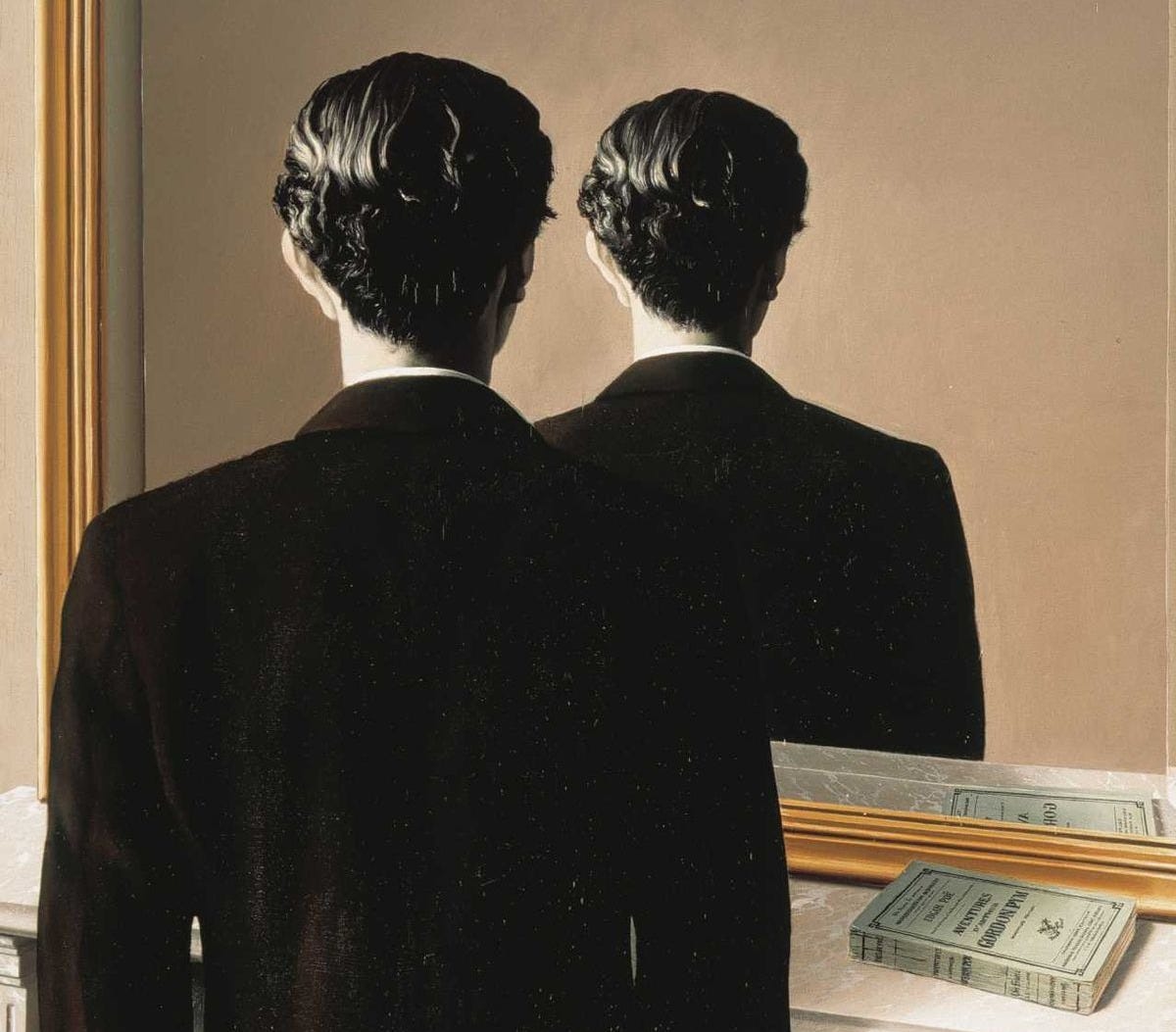
I have always believed that allowing yourself to be seen is a sacred act. And yet, the moment someone rests their gaze on you, something is taken. The sacred and the stolen arrive together – inseparable, I have come to think, by design.
People are incapable of comprehending the vastness of a being.
Under another person’s gaze, you solidify, you acquire attributes, you are no longer a consciousness in motion; you are reduced to an identity. They see you, and reflected back in their gaze is an identity they have bequeathed onto you. The specifics of said identity do not matter. What matters is that you are brought into, and within, someone else’s story – a villain if their plot needs one, or if you’re lucky, a protagonist with half your pages missing.
The moment you realize you’re being condensed arrives at different times for different people. But once it arrives, it never really leaves. You are fated to the painful vertigo of realizing that you exist in a way you cannot author, control, or edit. Parts of you will circulate outside your control, carried in other people’s memories, descriptions, and judgments. We move through the world both revealed and concealed, known and unknowable, accepting identities that are always partial.
If this sounds like a loss, it is.
But the loss isn’t merely that people misperceive us, it is that their perception often participates in constituting us. Sociologist Charles Horton Cooley once captured this dynamic with a simple idea: I am not who I think I am; I am who I think you think I am. The idea here is that being perceived entails not only misattribution and reduction but also partnered creation, a violent struggle for control, and the unsettling recognition that your identity will never belong solely to yourself.
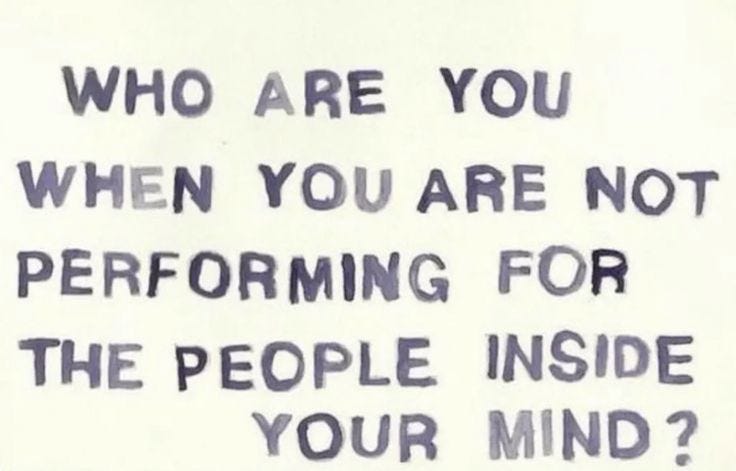
Of course, we are never only what others think we are.
But when we inevitably internalize the gaze, we are fated to collaborate in our own demise. We become both prisoner and guard, both performer and audience, living half a beat ahead of our own lives, anticipating how we will look from the outside. We become not only who we are but also who we suspect we appear to be. Identity, then, isn’t something we simply discover so much as something continually imposed and revised – something we are condemned to keep creating under conditions we do not fully control. Much of what we call personality may be in fact negotiation: a constant calibration between the self we feel ourselves to be and the selves we sense reflected back at us.
And yet, perhaps even this is optimistic.
Jean-Paul Sartre gave this anxiety its most radical expression in his work Being and Nothingness. For Sartre, the awareness of being seen does not merely complicate the self – it annihilates it. His famously misquoted line “Hell is other people” is not about irritating or immoral individuals; it was about the existential tension of coexistence itself. For Sartre, to encounter another person is to risk becoming fixed in ways you cannot fully undo. Human coexistence guarantees this tension.
The moment we become aware of another person’s perception, the self collapses into the object we imagine we are in their eyes. From there emerges only the self we believe is being seen. Even alone, we are no longer alone; we carry the possibility of being seen within us. The gaze of others is not a temporary intrusion but a permanent condition – one that cannot be switched off, only negotiated.
And yet, ironically, it was by accepting the inevitability of this condition through Sartre’s work that I was first freed from its sting.
For so long, I believed that being seen was a sacred act, something to perfect, something to win by minimizing misperception. But if Sartre is right, and I think he is, that perception does not merely shape identity but creates an unavoidable tension at the very heart of social existence, then the instability we feel about who we are is not a psychological failure: it is a fundamental condition of being human.
Sartre’s conclusions led him toward solitude, toward a life untarnished by what he called the hell of the Other. But it is here where I diverge with my favorite philosopher. If we cannot fully see one another, yet we also inevitably cannot stop trying, then hell is not other people; hell is when fear of perception stops us from returning to the world. Hell is refusing to contend with the irreversible fact that we cannot belong solely to ourselves.
I’ve started to suspect that seeing misperception only as loss is its own kind of vanity.
Sartre’s insight that we never possessed the sole ability to author a permanent self also opens onto a second consolation: others can never completely define us, and yet, neither can we fully define ourselves. It is, in many ways, wonderful to realize that the self is not a possession but a negotiation – unstable, unfinished, perpetually contested between our own freedom and the interpretations that surround us.
If there was never a pure, untouched self to be destroyed, then being continually reshaped by others need not constitute erasure so much as transformation. There is pain in being misattributed, but there is also beauty in being seen through the eyes of another. Do I really want my identity to belong only to myself? In love, friendship, and intimacy, I have discovered parts of myself I never would have found alone. Through others – their belief in me, their love, their perceptions – I have built a fuller identity.
We need not only be stolen from; we are also given conditions in which to positively create ourselves through the perceptions of others, and how we choose to engage in that process can make all the difference.
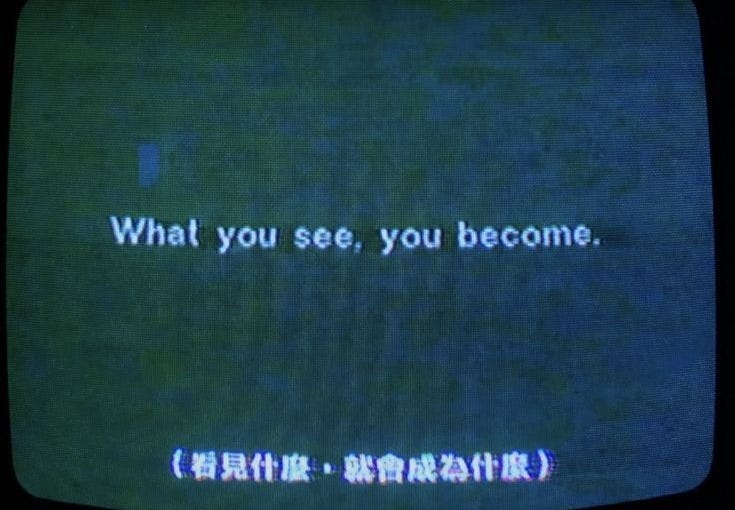
And so perhaps the beauty of being seen does not lie in being fully understood – because we never are, not completely – but in allowing this imperfect exchange to happen anyway. To accept that every meeting between two people will involve both revelation and distortion, recognition and loss. And to choose, despite this, to embrace the world anyway. Not because we can finally be seen as we truly are, but precisely because we can’t. And somehow still, against this fact, we choose to offer ourselves to one another.
xo, lost in los angeles
If you’ve been reading along and want to support what I’m building here, buying me a coffee is a wonderful way to do it ☕️
other pieces you may like


connect with me elsewhere
I can be found on Instagram or on my second Substack publication, Not Actually Your Therapist.
I appreciate how you articulate yourself so beautifully. You always seem to publish at the right time. Thank you for yet another amazing piece. 🤍
I say this on every post of yours that I read, I love you and your writing. This is beautiful. I have given up on being perceived a certain way, my perception of me is the most important, while people can help you be better they also never have the full story. It is truly okay to be misperceived.